
HOLISTIC & PSYCHO-SPIRITUAL therapy IN RENO, NV
Where evidence-based therapy meets soul-level exploration, deeper meaning, and lasting transformation.

Life’s hardest questions and challenges can’t be answered through logic alone.
Maybe you've already done therapy and talked through your story before this. You might have gained some insight and learned some coping skills to manage the pain, but something still feels unfinished.
You feel disconnected from yourself, your emotions, and maybe even from your purpose. Maybe you've spent years surviving, healing, or trying to make sense of what happened. And while you've come a long way, you can't shake the feeling that there's something more waiting for you….
More meaning.
More purpose.
More connection.
More of yourself.
Perhaps your grief has you questioning everything you once believed about life, pulling you toward something deeper. You’re feeling moved to do something different, even if you can't quite name it yet.

Healing can be practical, emotional, and relational.
And sometimes, it can be profoundly spiritual.
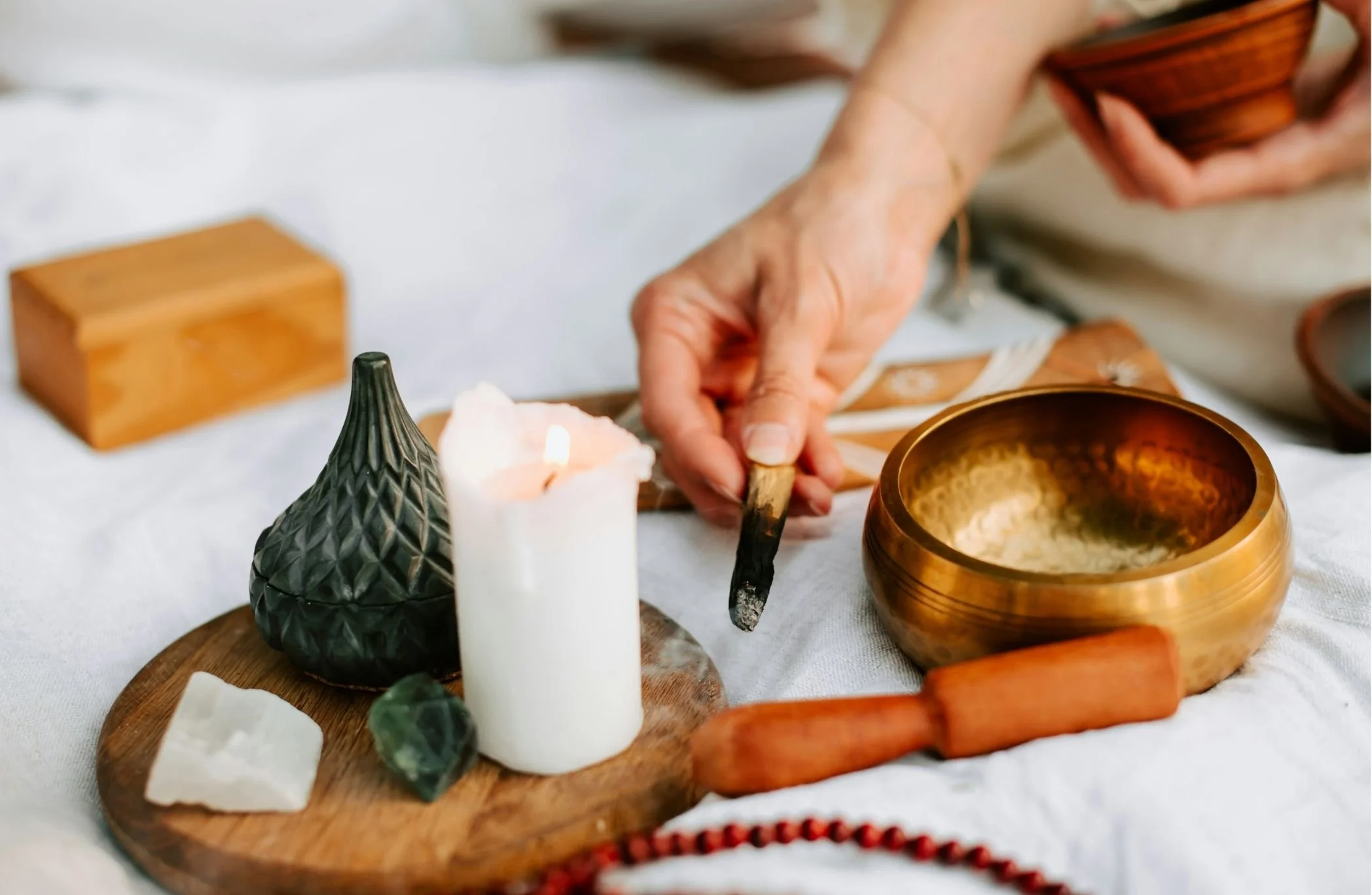
No two people heal the same way, just like no two people have experienced the exact same thing.
So the way I approach our work together will always be tailored to what you need and considering your comfort level, goals, and interests. I draw from a variety of evidence-based, holistic, and psycho-spiritual approaches to support your full-body and mind transformation.
This is a path to self-discovery and meaningful change.
Methods I Use

-
Grief isn't linear, and it doesn't have a timeline. Even years after a loss, it's natural to long for connection with someone you love. IADC is a gentle, grief-focused process that utilizes bilateral stimulation, similar to EMDR, to help clients process loss and explore their ongoing connection with a loved one. Many people find that the experience brings a greater sense of peace, resolution, and comfort while deepening the bond they continue to carry in their hearts.
-
Words can only take us so far. Guided imagery, visualization, and meditation allow us to intentionally slow down, turn inward, and connect with our own emotions, insights, and experiences that may be difficult to access through conversation alone.
You can explore my meditation audio library HERE.
-
Sometimes understanding ourselves requires looking beyond the story we’re currently living. Past Life Regression explores previous lifetime experiences that may shed light on current relationships, patterns, or challenges, while Between Lives Soul Regression explores the space between lifetimes to connect with themes of purpose, lessons, spiritual growth, and deeper meaning. These guided experiences can offer a profound sense of perspective, clarity, and connection.
-
I've been teaching yoga for many years, and I view it as a powerful somatic practice that helps us reconnect with the wisdom of the body. Through intentional movement, breath, and body awareness, yoga can help regulate the nervous system, release stored tension, and cultivate a greater sense of grounding, presence, and connection to yourself.
-
The breath is one of the most powerful (and simplest) tools we have for calming the nervous system and reconnecting with ourselves. Depending on your needs, breathwork can help regulate emotions, reduce overwhelm, increase self-awareness, and create space for deeper healing.
-
The way we feel emotionally is often connected to much more than what's happening in our minds. Together, we may explore how sleep, stress, nourishment, daily habits, and overall well-being influence your mental health, helping you create a stronger foundation for healing and growth.
-
Many people come to therapy feeling disconnected from their own inner knowing (which is understandable considering what they’ve been through). This work helps you reconnect with your intuition, trust yourself again, and make decisions that feel aligned with who you are—and less driven by fear.
-
Humans have used ritual for centuries to mark transitions, honor loss, and create meaning during times of change. These practices can provide a powerful container for reflection, intention-setting, grief work, and personal transformation.
-
In this work, I use oracle and tarot cards as tools for reflection, not prediction. They often help us access perspectives, emotions, and insights that are difficult to reach through direct conversation, creating opportunities for deeper self-understanding and exploration.
Here we honor the…
Science of the nervous system
Wisdom of the body
Power of intuition
Lessons hidden within grief
Questions without easy answers
Mystery of being human

You don't need to have all the answers.
You simply need the willingness to explore.
FAQs
COMMON QUESTIONS
-
Depending on your needs and interests, sessions may include mindfulness, meditation, guided imagery, breathwork, somatic practices, nervous system education, intuitive exploration, ritual, or other integrative approaches. For clients who feel called to deeper psycho-spiritual exploration, we may also incorporate practices such as Induced After-Death Communication (IADC), Past Life Regression, or Between Lives Soul Regression. Every intervention is thoughtfully tailored to your comfort level, goals, and unique healing journey.
-
Absolutely. Many clients seek psycho-spiritual therapy after the death of a loved one or another significant loss. Grief brings questions and complicated feelings about meaning, purpose, connection, and what comes next. This work makes room for those conversations while helping you navigate the emotional realities of loss.
-
Many of my clients have already done traditional talk therapy. While that work can be incredibly valuable, they often come to me wanting to go deeper. They want to explore not only their thoughts, but also their body, intuition, spirituality, purpose, grief, and the deeper meaning behind what they're experiencing.
-
My work incorporates evidence-based modalities such as EMDR, mindfulness, and nervous system-focused interventions, while also drawing from evidence-informed, emerging, complementary, and alternative approaches when appropriate. I believe healing can be supported by both modern science and wisdom traditions that have helped people navigate suffering, loss, and transformation for generations.
Rather than viewing these perspectives as opposing forces, I see them as complementary. Thoughtfully integrating evidence-based practices with holistic and psycho-spiritual approaches allows us to honor both the science of healing and the deeper human search for meaning, connection, and purpose.
-
Not all therapeutic approaches are studied or categorized in the same way. Some interventions, known as Empirically Supported Treatments (ESTs), have been extensively researched and are widely recognized for helping reduce symptoms associated with concerns such as trauma, anxiety, depression, and grief. Examples include approaches like EMDR.
Other approaches are considered evidence-informed or emerging practices, meaning they are grounded in clinical theory and supported by growing research, but the evidence is still developing.
I also incorporate certain complementary and alternative interventions (CAIs) when appropriate. These practices are often rooted in spiritual, cultural, or holistic traditions and may support meaning-making, self-exploration, connection, and personal growth.
My approach is thoughtful and individualized. Together, we'll discuss the methods we use, your comfort level with different interventions, and what feels most aligned with your goals. I believe healing can be supported by both scientific understanding and the wisdom traditions that have helped people navigate loss, suffering, and transformation throughout history.
-
I believe they are. Human beings have always searched for meaning, healing, connection, and purpose. My approach honors both the science of psychotherapy and the ancient practices, rituals, and wisdom traditions that have supported people throughout history.
-
No. You don't need to identify as spiritual or subscribe to any particular belief system. The most important thing is that you're open and curious to explore yourself in a deeper way. Some clients come seeking spiritual connection, while others simply feel there is more to healing than talking about their problems.
-
Many grieving people report meaningful experiences that help them feel connected to someone they have lost. Experiences like this can take many forms and are deeply personal. Rather than dismissing them, we explore them with openness, curiosity, and respect.